
- Monday-Friday 8-6 CST1-800-276-6508
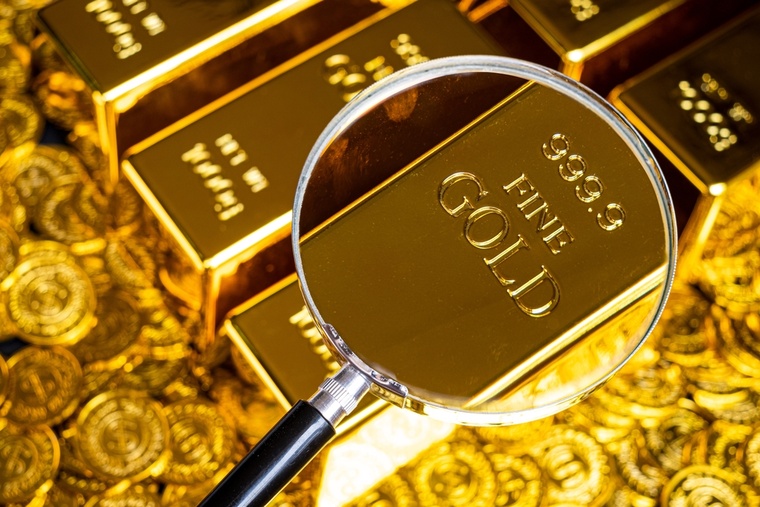
An assay office is a specialty office that tests, verifies, and certifies the elemental purity of a precious metal object. Through various methods, professionals in this field determine the elemental composition and purity of a given sample.
This service is critical for precious metals investors because the value of gold and silver stems first from the amount of pure element contained within the object. For instance, a gold nugget with 90% pure gold is necessarily more valuable than one with 50% gold, so those who trade in precious metals need to know exactly what they have before they buy and sell.
Assay offices yield consistency and trust to any precious metals transaction. With an independent assayer’s seal, buyers and sellers can be precise in the value of their trades.
Thus, in an era when precious metals trading is quite popular, assay offices have plenty of work to do. This page is your guide to what they do, how they operate, and how they remain a critical part of the precious metals industry.
Traditionally, assaying was a destructive act. The only way to test an object’s purity was to take a small piece of it – either by shaving a bit off the edge or drilling a small core out of the center of it – and subject it to different stimuli.
One of the oldest and most common methods is the fire assay. In this type of assaying, the sample is melted and processed so the pure metal(s) can be separated from their impurities, allowing the assayer to arrive at a precise percentage in the object’s composition.
Another venerable assay method is the scratch/acid test, in which you scratch a bit of the object onto a test plate and subject it to various acids. Since each metal reacts differently to acids, it is possible to determine an approximate purity range of the object based upon its reaction.
Nowadays, many assay offices use X-Ray Fluorescence (XRF) scanners to determine an object’s composition. This method analyzes the spectral signatures emitted by the object’s surface to determine a purity statement.
Now – truth be told – XRF scanners have not risen to the level of fire assaying in terms of accurate results. They are mostly accurate, but they are limited by the fact that they can sometimes be fooled by plated objects or other discrepancies in the core of the object.
However, if the object in question is a sovereign coin, XRF is often the preferred option due to the damage sampling can cause. Where bars and rounds are mostly unaffected by the removal of a shaving or core, a coin’s value is all but lost if it incurs a similar type of damage.
No matter the method, the assayer issues their certification of the object’s authenticity as the final act of the job. Assuming that the office is in good standing and has a reputation for honest work, the assayer’s seal promotes trust and faith when the object changes hands.
In times past, the US Mint and other sovereign mints had to maintain assay offices due to the risks of shipping raw metal east for processing and coinage. These on-site offices could quickly determine the purity of submitted ore and cast it into bars.
Thus, they served a critical role in increasing the efficiency of the coinage process. Once the prospectors and other gold or silver owners had their holdings confirmed, they could proceed with having them stamped into actual gold and silver currency.
Nowadays, the need for this type of confirmation has disappeared due to changes in the composition of American coinage and the laws governing it. No circulating coins contain silver or gold any longer, and the free stamping of bullion into coinage has been impossible since 1933 for gold, while silver was removed from circulating coinage in 1965.
Private assaying offices remain in service to this day, though. Their role is almost entirely focused on verifying bullion products such as bars or rounds, rather than on preparing coinage.
Thus, modern assay offices help preserve the integrity of the precious metals market. There’s no need for them to help the US Mint when most American coins are made of cupronickel.
The job of the assayer is an important one because of the valuation differences derived from purity we mentioned above. What matters is not the total weight of an object, but the total mass of precious metal within it.
Spot prices are a measure of the value of a single troy ounce of pure precious metal. Therefore, the foundational value of any precious metal object is found by multiplying its weight (in troy ounces) by its purity percentage, then multiplying the result by the spot price.
So, assayers are in no danger of running out of work. There’s simply too much money riding on their work to think otherwise.
Assay offices are the quality control officers for the entire precious metals industry. Without their work, there could be no consistency and certainty about the value of the objects traded between buyers and sellers.
Over time, their role has shifted from assuring the authenticity of coins to certifying the quality of bullion products. However, with gold, silver, and other precious metals remaining popular investment options, there is an ongoing need for the services of a capable assay office.
Subscribe to the JM Bullion newsletter to receive timely market updates and information on product sales and giveaways.
Major Payment Methods Accepted

Download Our Free App Today


© Copyright 2026 JM Bullion. All Rights Reserved. Your Privacy Choices