
- Monday-Friday 8-6 CST1-800-276-6508
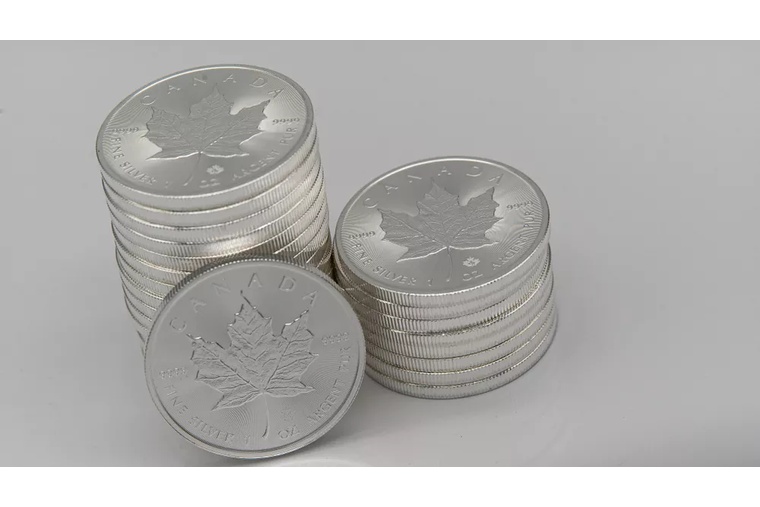
As trustworthy as most people in the precious metals game are, there are some bad actors out there. Some people may try to pass silver to you that isn’t up to snuff.
So, it’s important to be able to spot fake silver when you’re considering a deal. Unfortunately, counterfeit silver is relatively common in the market.
Thankfully, there are several easy ways to check your holdings and make sure that they are as advertised. So, let’s talk about some of the best ways to spot fake silver hiding among your legitimate precious metals.
Let’s start by discussing the importance of purity with your silver. Although some silver coins derive a significant portion of their value based upon their historic significance and rarity, the reality is that most silver products are valued for their intrinsic silver content.
So, you have to know the level of silver in your silver, so to speak. Generally, it is easy to tell how pure your silver pieces are due to the purity marks inscribed into them.
The purity mark is a three-digit number stamped into a bar or round. The three-digit number corresponds to the decimal level of silver content in the object.
So, a 999 mark means that the piece is .999 pure silver. To put it another way, the silver piece is 99.9% pure.
You can then translate this understanding to other purity marks you may find. A 925 means that the object is 92.5% pure. A purity mark of 900 is a 90% piece, and so on.
Incidentally, you may see certain adjectives about silver that may not make sense. “Sterling” silver must have a purity at or exceeding 925 or 92.5%. “Fine” silver refers to pure silver, so the purity mark refers to the portion of the object that is fine, or pure.
Of course, a counterfeiter can stamp whatever purity marks he or she wants to put on the fraudulent pieces. So, although purity marks are great if you are confident about the provenance of your silver, you have to take them with a grain of salt if there’s any doubt in your mind. Older and imported pieces carry hallmarks and assayer’s marks rather than a plain three-digit number, and those are worth learning to read.
1. Weight and Size Analysis of Fake Silver
The first way to check your silver is one of the simplest – the weight and size of the piece. A 1 oz silver coin, bar, or round should weigh exactly one troy ounce, or 31.103 grams, and contain exactly 1 oz of silver. Now, a piece at 99.9% purity technically does not contain a full troy ounce (that last 0.1%), but this distinction doesn’t usually affect the value enough to matter.
A lower-purity item may actually weigh more than a pure piece, however. If the object is certified to contain an ounce of silver but is minted at, say, 90% purity, the overall piece is going to weigh 1.11 ounces (1 troy ounce plus 0.11 ounces of a different metal).
Counterfeit silver may be lighter or heavier than the genuine article. So, you may be able to tell by the feel of the object.
However, the best thing to do is purchase a digital scale to check the weight of the object. Try to find one that is used for scientific purposes and/or has smaller measurements – a bathroom scale is going to be too imprecise for your purposes.
Size matters as much as weight, which is why counterfeits so often fail on dimensions. Silver’s density is 10.49 grams per cubic centimetre, so a genuine 1 oz round has a fixed diameter and thickness that the mint publishes. A fake made from a lighter metal has to be bigger to reach the right weight – matched on weight, a copper piece needs around 17% more volume. A pair of calipers and the mint’s published specifications will catch that immediately, and comparing how silver and gold differ in density shows why the same trick is even harder to hide in gold.
2. The Magnetic Test
As is the case with many tests, the magnet test works because of silver’s innate properties. Silver is not magnetic, so if your piece indicates any magnetism, it is not pure silver.
Get a strong magnet and pass it near the items in question. If any of them seem to be attracted to the magnet, there’s a problem.
However, bear in mind that this test has several limitations and can be overcome by shrewd fraudsters. For one thing, only a handful of common metals – iron, cobalt, and nickel – are actually magnetic, so it’s easy enough to make your fake without using one of them. Thus, a magnet test over a piece made of, say, mostly zinc is not going to reveal any attraction.
The other issue is that a fraudster might fool the magnet by using an item with just enough silver content to seem as though it is not magnetic. A counterfeit doesn’t necessarily mean that the item contains no silver – it may just not be as pure as the fraudster would like you to believe, and their profit margin lies within the silver “savings” that they are able to secure.
A more revealing version of this test uses a strong neodymium magnet on a tilted surface. Silver is an excellent conductor, so a magnet sliding down a genuine silver bar induces eddy currents that brake its descent – it creeps rather than drops. Be clear about what this proves, though: it shows the piece is non-magnetic and highly conductive, nothing more. Copper conducts almost as well as silver, so a copper-cored fake will slow the magnet just as convincingly, and a silver-plated fake will too. Treat it as a quick screen to be paired with weight and dimensions, never as proof on its own.
3. Checking the Sound
Another way to check your silver items is a bit of an oddity. Silver just sounds different.
Because silver’s atoms are densely packed, it bears a distinctive “ring” when it is struck. All you have to do is tap on the object gently, and listen for the tone.
On the other hand, a counterfeit item might have a dull or flat sound when struck. So, if you don’t hear a distinctive high-pitched ring when you hit your silver piece, it might not be silver.
However, it can be difficult to distinguish a “correct” tone from one that isn’t the right sound. So, you probably want to do more than this test.
4. Ice Cube Test
If you’d prefer a simpler method, however, it might be available no farther away than your freezer. Believe it or not, the humble ice cube might be able to tell you whether your silver is real or not.
Silver conducts heat extremely well. In fact, no other metal conducts heat as effectively. So, just put an ice cube on it, and see if it melts quickly. If so, it might be silver.
The obvious pitfall with this method, though, is what exactly constitutes “quickly” in terms of the time it takes to melt. Though silver is at the top of the food chain, several other metals, such as copper and aluminum, are quite conductive, too.
If you want to get a bit more serious about your testing, you might consider using a silver testing kit. Silver testing kits come in a few different formats, and each of them comes with its own benefits and drawbacks.
1. Acid testing
With an acid test, you will scrape a small portion of your piece against the provided black testing stone. Then, you will apply the provided acid on the silver streak on the stone.
Once applied, the acid will turn a distinctive color based upon the metals that it contacts. Bright red indicates .999 fine silver and a darker red indicates .925 sterling. Green points to a .500 piece, blue to nickel, and yellow to lead or tin. Treat brown with caution: it can mean .800 silver, but copper and brass produce a brown reaction too, so a brown result is not on its own proof of silver.
One thing to note is that acid tests require you to damage your silver piece to perform the test. The damage may be minimal, but we do not advise this type of test for any type of silver coin, as their condition is often a major component of their value.
2. Electronic testing
Another type of testing is electronic testing. Several companies offer specialized equipment that can be used to detect gold, silver, and other metals.
This type of equipment functions by measuring how the test object conducts electricity. Because each element has a different level of conductivity, the sensor can detect which are present in the sample.
These tests are quite accurate. However, as you might expect, they are also rather expensive, and may be cost-prohibitive for you to buy.
3. XRF testing
Finally, you can test your metals using X-ray fluorescence. Machines that perform this test are similar to the electronic tests above, in that they rely upon the unique signature that each element produces.
Unlike electronic testers, however, XRF bombards the object with x-rays and reads the reactions that the silver piece produces. It is exceptionally accurate about the composition of the surface it reads. That is also its main limitation: XRF only penetrates the outermost layer of the piece, on the order of microns to a few tens of microns. Thin plating usually gives a mixed reading that betrays the base metal underneath, but plating applied thicker than the instrument can see will return a clean result on a fake – and that is exactly what a sophisticated counterfeiter engineers. For that you need a method that accounts for the whole object, such as weight and dimensions together. The same trap catches buyers on the other side of the counter, which is why telling real gold from gold plating is just as awkward.
Unfortunately, these types of machines can be more expensive than the electronic testers. Furthermore, they may require calibration or other types of adjustments that the average person may not be capable of performing.
Now, you can also just look at your silver pieces. There are some key visual clues to observe whether your silver is real or fake.
The first thing to observe is the actual craftsmanship of the piece itself. Genuine silver pieces are crafted with incredible precision, like the American Eagle coin. If your silver pieces have visible imperfections – the kinds that only amateurs would make – it might be cause for alarm.
You can also check how tarnished your silver pieces are. Perhaps surprisingly, a silver piece that doesn’t tarnish much over time may not actually be silver. Silver takes on a patina as it reacts with trace sulfur compounds in the air, forming silver sulfide rather than oxidizing in any meaningful way under normal atmospheric conditions. A fake may not tarnish at all, or it may carry an artificial finish of some sort. That chemistry is also why how you store silver changes how quickly it happens.
Finally, you can look at the marks that the minter placed into the piece. Look for the mint marks, of course, but pay special attention if you see any inconsistencies in the font or the engravings. Different depths on the cuts made in the metal might indicate an unsteady hand or some kind of manipulation at play.
At the end of the day, the only way to confirm the true authenticity of your silver pieces is to turn to a professional. Professional jewelers or precious metals dealers like JMBullion can provide you with a definitive answer about the purity – or lack thereof – of your silver pieces. For coins, third-party grading does the same job and seals the result in a tamper-evident holder.
You can seek professional verification at any time, but you should do so especially in a couple of situations. For one, if you are about to sell your silver, you should make sure that everything is as you expect it to be. It would stink to find out that one of your pieces is illegitimate, but that’s nothing compared to any potential legal liability about selling a false piece.
The other time is if you acquire silver in a manner such that you don’t purchase it or get it from a professional organization, dealer, or jeweler. If you buy silver from a private investor or if you receive silver as an inheritance, it’s probably a good idea to make sure that it’s what it’s supposed to be.
Fake silver is a real thing. It’s important to be able to determine if the silver you have or are considering for purchase is real or not.
One thing to mention is that there is no reason that you cannot combine several of the tests above to get a more complete picture. In fact, it’s probably best to do that.
However, none of the content on this page is meant to make you paranoid about your silver. If you buy from reputable dealers like JM Bullion, the chance of getting a false piece approaches zero.
You just have to be careful, as you do with any investment.
Subscribe to the JM Bullion newsletter to receive timely market updates and information on product sales and giveaways.
Major Payment Methods Accepted

Download Our Free App Today


© Copyright 2026 JM Bullion. All Rights Reserved. Your Privacy Choices